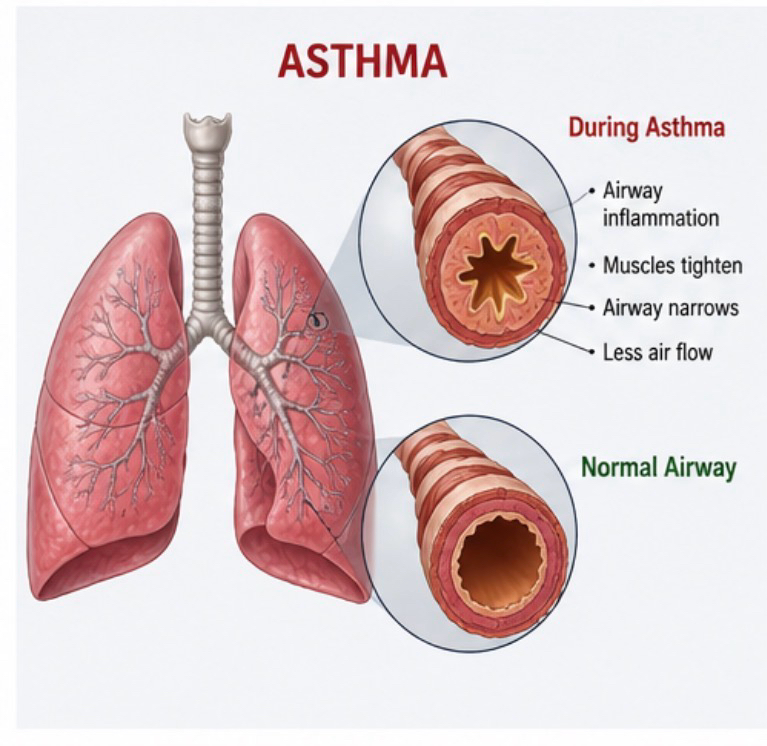
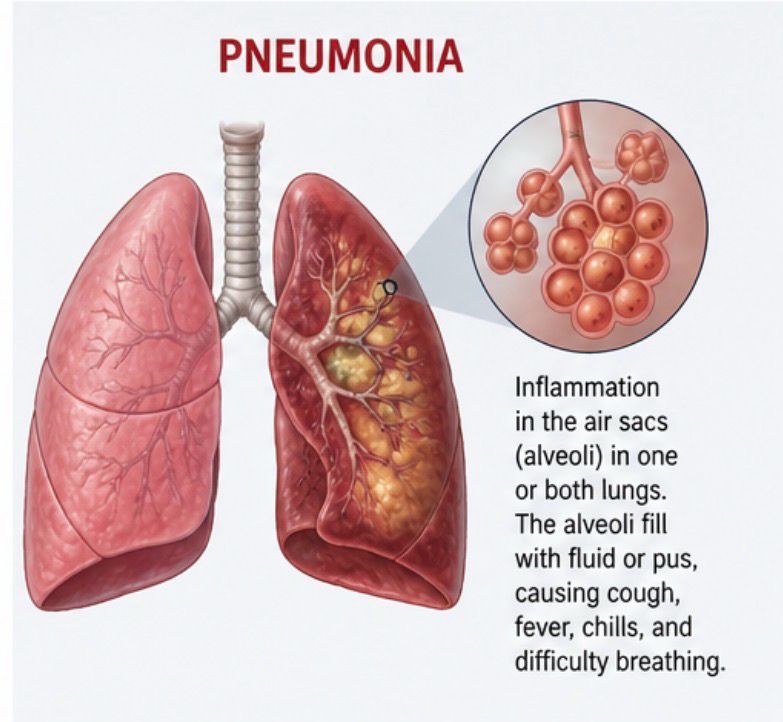
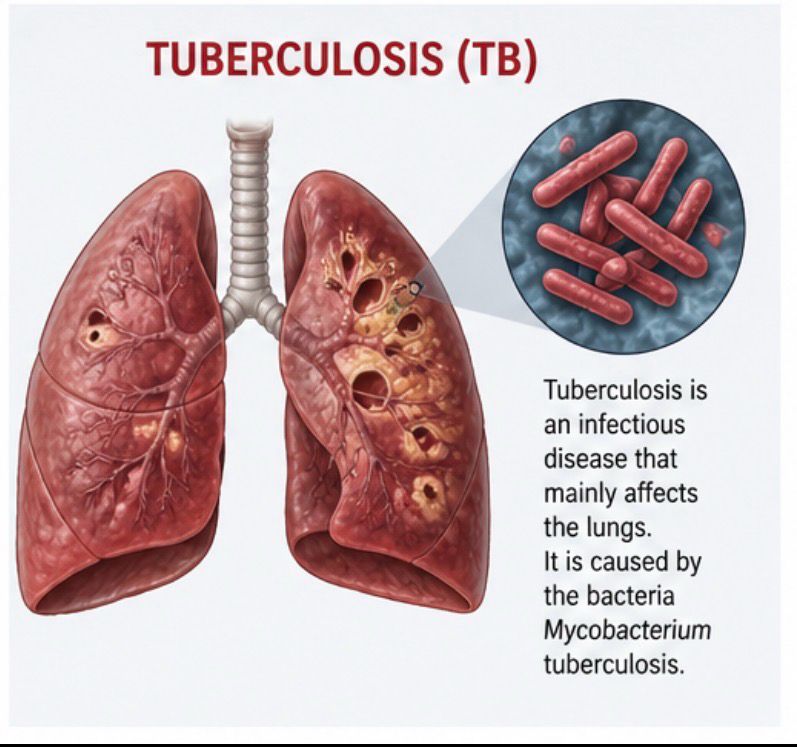
The respiratory system is the body system responsible for breathing and gas exchange. It supplies oxygen to the body and removes carbon dioxide produced by cellular activities. The respiratory system consists of the nose, pharynx, larynx, trachea, bronchi, bronchioles, lungs, and alveoli. Air enters through the nose and travels through these structures to reach the lungs, where gas exchange takes place. The diaphragm assists the lungs during breathing.
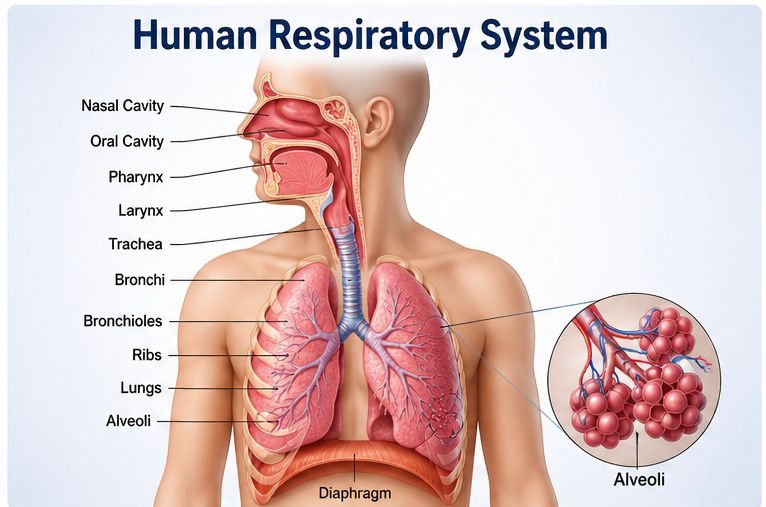
Nose /Pharynx/Larynx/Trachea/Bronchi/Brochioles/Alveoli
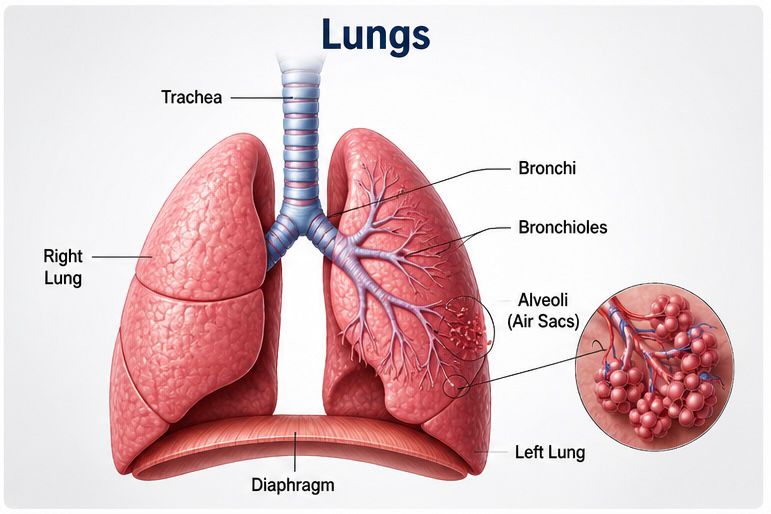
lungs are the main organs that enable gas exchange
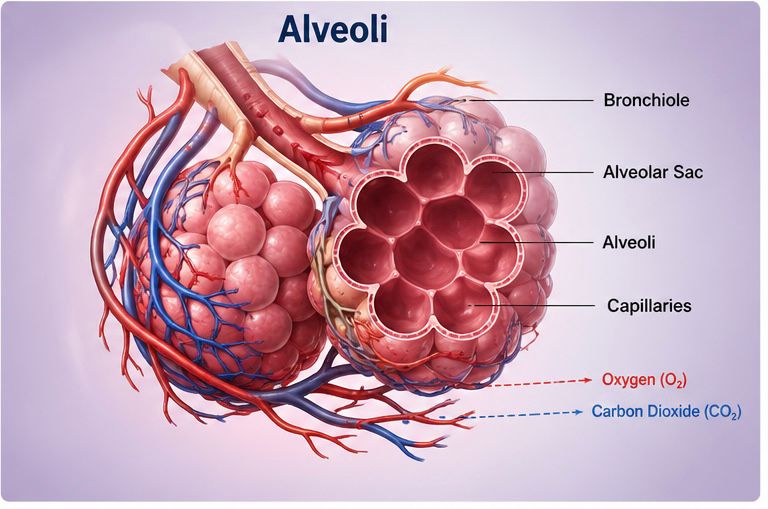
alveoli is a microscopic air sacs where O2and CO2 exchange
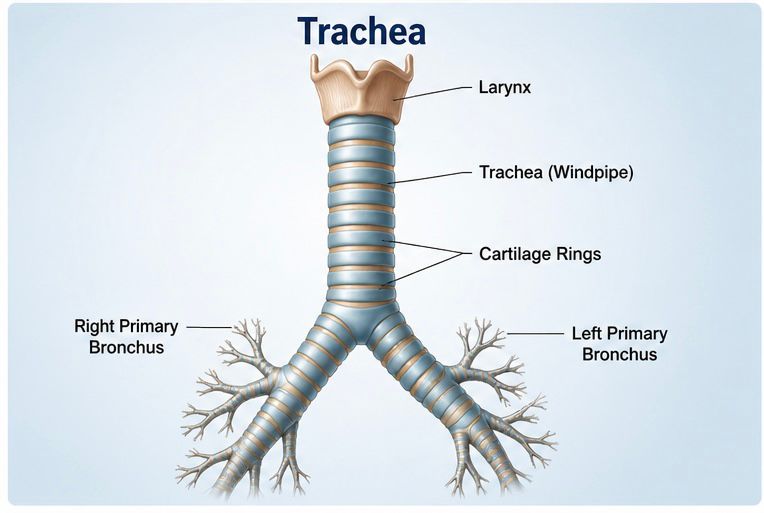
Trachea is a tube that trasports air between the larynx and lungs